Monday, 11 April 2016

The gift of vulnerability

I don't know anyone who consciously believes that they are perfect, no one who genuinely thinks they've got themselves all sorted out. We all know that we have areas of weakness and that we make mistakes sometimes, and we are aware that other people do too... But despite this communal awareness of imperfection, we have a culture that is saturated with messages of perfection and it leads us to hide our weakness, to feel shame about mistakes.

And so we don't talk about it. We put our best side forward and act like we know what we're doing.

But what I'm realising is that when I do that, it does more damage than I knew.
It works like this...
When I hide and feel shame about my own weakness and inability to measure up, then I will inevitably communicate the message that in order to be accepted by me, other people must treat their own brokenness in the same way. 
We know this from experience. You trust the people who are honest about the hard stuff and you feel like you can be real with them. Why is this?
It's because with their vulnerability, they've communicated the message that weakness and struggle are an accepted part of this relationship.

People who are honest and accepting of their own weaknesses create around them a space in which it is safe for other to do the same. And in a world where from a very young age people are taught the language of shame, they're taught that they need to appear strong and competent... then to offer the gift of imperfection and weakness is priceless. 


Wednesday, 10 February 2016

6 baby steps to a more sustainable ethical lifestyle


If asked, most people would say that they value sustainability, fair trading and ethical production of goods. There aren't many people who enjoy intentionally trashing the planet and exploiting other people, so we'll start with that as an assumption.
However, lack of knowledge, location and lack of money often mean that our values remain at the ideals level rather than being a reality in our everyday lives.

For a long time I believed that if I was to live a sustainable and ethical lifestyle it would mean I had to get free range chickens, install solar panels, make my own clothes and drink organic soy milk straight from the plant...  And while this might be a slight exaggeration, I believe this is a view many people still hold.
So, here I've explained six simple and easy changes you can make which go a long way in making our culture one that treasures the natural resources of the earth and gives value and dignity to her global citizens, which to be honest seems like a pretty common sense way of living.

1. Take reusable shopping bag when you go grocery shopping. Supermarkets go through millions of these every year, most of them ending up in landfill. NZ laws mean that recycled plastics cannot come into contact with food so it can be hard to find uses for the bags that do get recycled. You can keep a few material bags in your car or somewhere easy to grab on the way out the door.... They can carry more weight and are much easier to hold than plastic bags and there's no risk of your groceries spilling out all over the road when your 6 gram plastic bag splits!

2. Check out local op shops or thrift stores. When I was younger I had a passionate dislike for these places, I saw them as dirty, filled with old clothes that smelled like their last owners. Now that I have to be an adult and buy my own clothes, my opinions have dramatically changed! Op shops generally do a fantastic job at cleaning and sorting their clothing to filter out unbearable items and it can be an adventure shopping there! Not to mention that you can get clothes for $2 that would have cost $40 new. There's also the benefit of knowing you're not contributing to the fast fashion crisis that is ravaging our neighbors around the world. If this is something you're unfamiliar with, check out my previous posts on the fashion industry.

3. If you can afford it, choose the fair trade option for coffee, chocolate, bananas and other food items. People tell me they can't justify paying an extra three dollars for a block of chocolate... And I think "can you justify paying an extra three dollars to ensure the workers involved in producing it are treated with dignity and have a chance to give their families a future?"
I'm not being harsh. I'm being real.
If you can't afford to choose a fair trade option, maybe you should ask yourself whether it's really worth the true cost of buying the cheaper product.

4. Use your legs. Driving around town is faster, easier, you stay dry and you don't have to carry things. I get it. But when you choose to walk, you are lowering your carbon footprint, experiencing firsthand the community you live in and probably doing your waistline a favor too. You won't always be able to choose to walk due to distance or children etc, but make a habit of questioning whether you really need the car today and you'll find yourself pumping those legs much more often!

5. Buy a good drink bottle. Yes, plastic bottles can be reused for sure, but before long they become kind of scummy


looking and the chemicals in the plastic aren't amazing for you either. If you invest in a solid plastic or metal drink bottle, you look way cooler and make a stand against our never ending disposable culture.

6. Start conversations. Conversations about ethical and sustainable living should never be relegated to the realms of hippies, home-schoolers and policy makers. Oh that this topic would be a common occurrence in our families, churches,  workplaces and classrooms! Ask good questions, let yourself be challenged by others opinions, be open minded about this stuff.

Saturday, 19 December 2015

7 things a good friend will do

Each year I recognize a little bit more the absolute importance of having good friends and being a good friend. These past few years I have been so blessed to have had amazing people around me that have encouraged me, challenged me and helped me grow more than I would have ever thought.
I don't always get the friendship thing right (like that time in primary school when I told a girl I wouldn't be her friend unless she gave me her lamington.... yup that really happened.) and I know there are times when I hurt people with my words and actions, but there are also times when I manage to put into action some of the stuff I know in my head! 
So this post is a collection of 7 things that a good friend does: all of these being things I am still working on myself, but know how important they are!

Number 1
Be there.  No matter what time of day or night or whether it's convenient, just be there. Be there when that relationship ends, be there when the drunken call comes from town at 3 am, be there when they get that promotion, be there when that sick family member dies and the funeral is out of town. Some of the most significant friendship moments for me have been when I was at my absolute lowest and ugliest, not even fun to be around but someone was there anyway, refusing to leave. And be aware that most people won't ask you to be there, don't wait for that. Just be there anyway.

Number 2
Listen. Maybe for the guys it's different, but I will speak on behalf of the girls... Usually I don't want advice or a solution from my friend (If I do, you'll know about it). I just want you to listen and validate that what I'm feeling is a real thing and worth addressing. That's all. If you're a close friend, you might have to listen to the same thing several times before they figure it out... That's okay. Try not to say "We've talked about this before", but just listen again, maybe talking something through will bring the breakthrough they're wanting.  


Number 3
Ask good questions. This one really goes hand in hand with listening... I would go as far to say that asking good questions is a part of being a good listener, and it takes practice. Questions can have two purposes... 1- They get you information about someone or a situation. ie, What time do you need me to be at your practice? Which flowers does your mum like best? That kind of thing... or 2- They are a tool to draw out the knowledge, understanding and experiences of another person in a way that allows them to better understand themselves or their situation. Most of us can figure out the first type of questions easy enough but the second type is what a good friend will need to practice. This could be something like... "What is it about this relationship that makes you a better person?" "When you play piano like that, what does it mean to you?" "How do you think your natural teaching skills can benefit this organization that you're working with?" These types of questions are not for your information but almost exclusively for the other persons benefit.  I could do a whole blog on questions, I love this stuff!

Number 4
Don't assume your relationship will remain strong left unattended. Wow, this is one that constantly challenges me and I know I've lost some friendships through not understanding the importance of this. A friendship is just like any other living thing.... If you don't look after it and pay attention to it, it will die. Fact of life. 
Make an effort to text back. Write a note and leave it with their stuff. Make time to go out for dinner. All of those little things can mean the difference between life and death of a friendship or relationship. Some friendships survive for seasons solely on one persons initiative and sometimes that's okay but don't let it go on too long, start watering that thing too!

Number 5
Let each other grow and change. Your friendship might have been amazingly strong and valuable during high school or university or during a specific season.... but don't lock someone into staying that same person as you move forward in life. Allow them space to explore and become someone different as they move through experiences that are bound to shape both of you. Trust that your friendship will stay strong even as you have the courage to hold someone with loose hands

Number 6 
Champion your friend in what they're passionate about. Oh how amazing is it to have someone who is secure enough in themselves to build you up and champion you into what you were made for! Be that person who tells everyone how amazing your friend is in front of them... Be the embarrassing person who holds up a big sign in the music recital and makes everyone look at you... Be the person who calls later that night to tell your friend what an amazing job they did at organising an event. Whatever your friend is into, whatever dreams they are pursuing, be their biggest cheerleader! 

Number 7
Be willing to apologise. No matter how much you care about someone and want to be the best friend you can, sometimes you're gonna mess it up. Maybe you accidentally tell a secret they shared, maybe your music recital sign was a little too embarrassing and it put off their performance. Maybe you were tired and snapped about something that happened long ago, or maybe you just became too busy and forgot to be a friend for a while... Whatever it was, don't be too prideful to turn up at the house and say sorry. No text apologies! Are we still in high school people?? 
It might be that your friend needs a little more time to work through things until they will let you back in, and that's okay. Be sincere in your words, follow it with your actions and give them the time and space that they need.  

I thought this image captured an old friendship so well!

Friday, 4 December 2015

True Cost Part 2 - Extreme Makeover, Closet Edition

My last post took the rusty lid off the Pandora's box of fashion, exposing some of the deception, manipulation and tragedies behind our clothing, so if you haven't read that one yet, do that first, because this one is only meaningful in light of the huge problem. 

With this post I'm aiming to introduce a little hope into the equation... Not everyone is buying into this industry. For years there have been people questioning, fighting and getting a little creative as they wage war against this beast. I want to honor them and tell you what they've done as well as challenging you to think about what you could do.

Everybody needs to take responsibility for the garment workers, we live in a global world and we can do much better than this! We have an international trading system that is systemically dysfunctional, completely out of balance and needs to be addressed. I recognize however that the fashion industry changed very very quickly to be like this, and after a big change in any industry it takes a while to smell and feel the dirt that comes from something that is polluting...and now, we've come to the point where the danger cannot be denied and I have a lot of hope that things will begin to change.


Here are a few companies and people that have taken on the challenge, identified with the humanity of the garment workers and done something...

People Tree, a sustainable and fair trade fashion company that sells online all over the world. They source all of their material through organic means and work closely with their workers who they call partners. They start with the people and the skills they have and then design clothing from that space instead of the other way round. Check them out at http://www.peopletree.co.uk/ 

Larhea Pepper, a Texan cotton farmer who has changed her whole farm around in order to produce organic cotton. They have forsaken mass pesticide spraying and just spray the weeds by hand... This ensures that the land doesn't have excess pressure on it from the chemicals and the cotton produced is much healthier. Larhea made this change after her farming husband died from a cancer they believed came about from working too closely with dangerous pesticides for many years. 

Green Carpet Challenge, An initiative encouraging celebrities to take part in more mindful forms of fashion, using their high profiles to raise awareness. More information at http://eco-age.com/green-carpet-challenge/ 

Swallows, A fair trade fashion and development project based in Bangladesh. This is special because not only do they provide work for people in Bangladesh and a sustainable fashion option for consumers, but they also have a Swallows school in the area that gives education to 320 children. http://www.peopletree.co.uk/about-us/who-makes-our-products/swallows

Patagonia, a popular outdoor wear company that have begun taking responsibility for where their clothes come from and are asking questions that challenge their customers views on consumerism.

This is just a few of many groups taking action to improve the quality and integrity of the clothes we wear. But that's just what they've done, everyone will have a different response... For me, it makes sense that I no longer buy clothes from mainstream companies that haven't taken any responsibility for their part in the problem. I try firstly to not buy clothes if I don't have to, this is partially to fight the lie that says I need more all the time, and partly to not be a part of making more stuff. Buying second hand is always a great option too. There are lots of ethical options for clothes as well, for NZ unfortunately most of these will be online but that can be navigated. 

There's a lot of deeper reasons behind why we need to be responsible, why we need to take a stand... a lot of them depend on what your beliefs about God and the value of humanity is, both things I will touch on in the third and final part of this blog on clothing... But until then, ask yourself, what are some practical changes you could make that would, in some small part, join the war against greed and selfishness? What could you do that would be a small act of solidarity with millions of oppressed and desperate garment workers?


Saturday, 14 November 2015

True Cost Part 1 - Out of sight, behind our closet doors


This piece of writing is not pleasant to read. I tried to make it like that because the subject matter is not possible to sugar coat. It’s been hidden far too long, rotting and growing out of control, so shining a light on it will always be ugly and unpleasant.

The fashion industry crisis is remarkably complex yet simple. It is a matrix of economics, multi layered exploitation, globalisation and capitalist mindsets. Yet at its most basic level, it is an industry driven by greed, desperation and ignorance.  The only reason I am even attempting to articulate anything about it is because I think all people have been created good and have the potential to do good, and a lot of the time it is honest ignorance that fuels this beast. So maybe if people knew, it may lose its power. 

The following statistics are reliable, sourced from a documentary and double checked. If there were any disparities, I took the least shocking number...
·         
  •  93% of American clothing is outsourced from factories in the developing world
  •  Bangladesh, the most common origin of clothing, has a minimum wage of $3 per day
  • There are approximately 40 million garment workers in the world today, 85% of these are women
  •   In the past 16 years, there has been 250,000 farmer suicides in the developing world due to the pressure put on them to produce cheap cotton and resources for large companies. This is one farmer every 30 seconds, the largest recorded wave of suicides ever in history
  • Globally, we buy 80 billion pieces of new clothing a year, a 400% increase from 2 decades ago
  •  Fashion is the second most polluting industry in the world, second only to the oil industry

Here is the simple version of the problem.

In the past, clothing was mostly made locally, or at least within the country it was sold in. Clothes were seen as something you would buy, look after, and expect to last for a good amount of time... Then, with the evolution of globalisation and the industrial revolution, we saw something emerge now known as Fast Fashion. 
Similar to the fast food industry... low quality, quick and cheap. 
Instead of having two seasons of clothing, winter and summer, there was new styles coming out every week, moving ruthlessly towards an industry that only benefits large companies.
Those at the top of the product chain (That’s you and me) can choose who makes their clothes, and it became whoever would give the cheapest price. So multi-billion dollar clothing companies are employing dirt cheap labor in developing nations such as Bangladesh  because then they can sell it cheaper back home and still enjoy a ridiculous mark up on the products. 
These companies then come back and say “We can get this type of shirt made for $4 in another city and if you don’t do it for us for $3 then we’ll take our business and go somewhere else”. These factory owners are desperate for the business of Western clothing lines, so they have no choice. The material itself and the resources taken to create the clothes is not getting any cheaper, but our clothing prices in the West are dropping each year... The only place these margins can be squeezed is at the garment workers themselves.  With longer hours, lesser pay and worsening conditions, the risk and burden of Fast Fashion is being carried by those who are most vulnerable.

Don’t just think women in sweat shops... Think billions of tonnes of landfill, think 50 million L of contaminated water from leather factories pouring into the local water source in India every single day. Think cotton farmers forced to treat their precious land like a factory, putting pressure on it that is rapidly becoming evident it cannot sustain. Think women having to take their children to family or friends because they cannot work enough hours to feed them. Think increasing levels of birth defects, cancers and disabilities in the villages near where cotton pesticides are spraying. Think millions and millions of vulnerable people being oppressed, enslaved and killed... in the name of Fashion. 

There are two major industry events that I think are important to be aware of, because they represent the risk, the sacrifice and the suffering behind the clothes we can get so cheaply today.

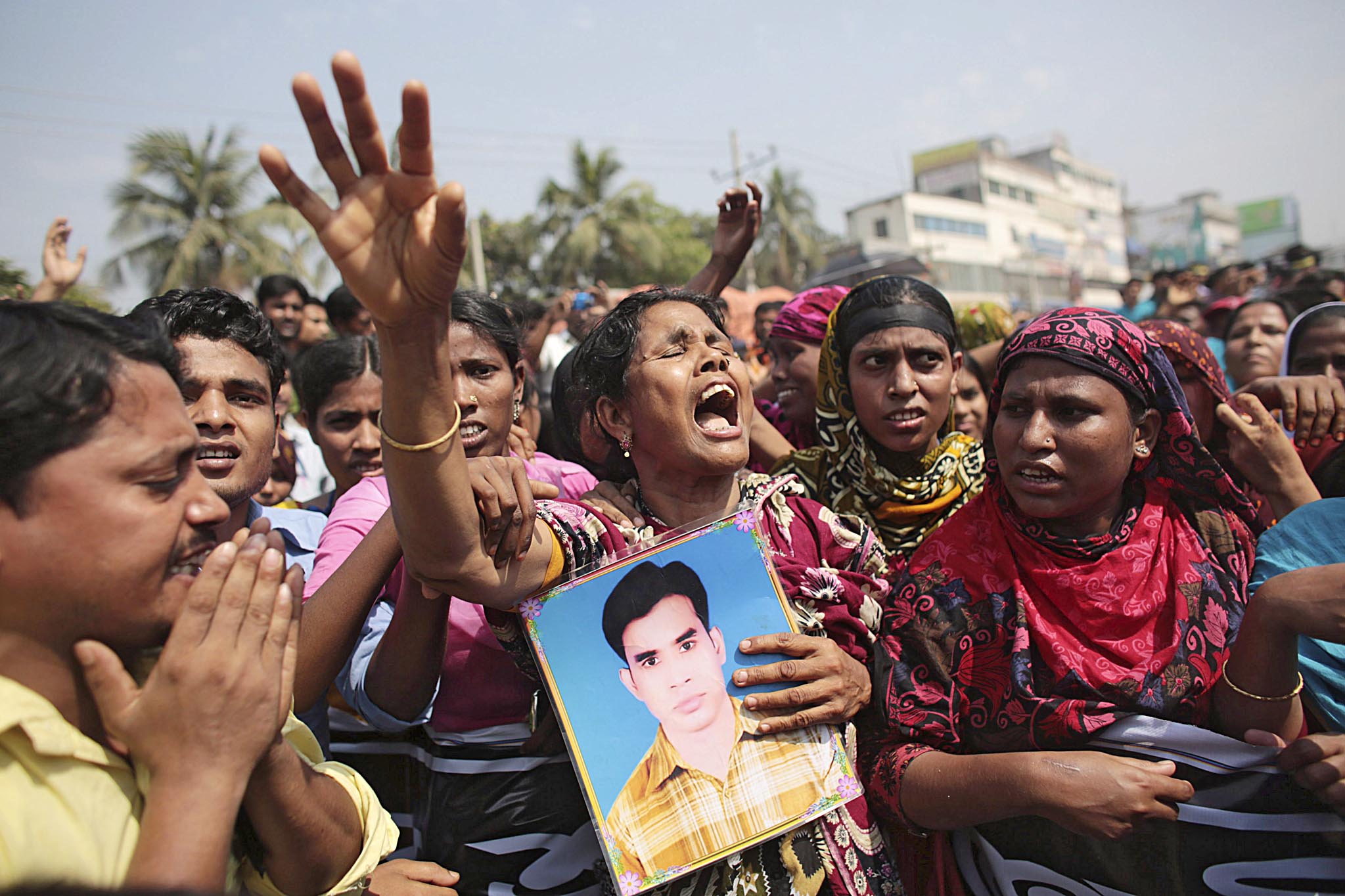
 Weeping for  missing and dead loved ones outside Rana Plaza
In April 2013, workers in the Bangladeshi garment factory, known as Rana Plaza, noticed structural problems with the building. It was an old factory and money had not been invested in maintaining the building, since there are no enforced Health and Safety or building laws in Bangladesh. After pointing out their concerns and having received an order to evacuate, factory owners forced all the workers back into the building and demanded they continue making clothes. Later that day, the building collapsed, as predicted, trapping and killing 1129 workers. 

Garment Factory Rana Plaza collapses, killing 1129
Their voice of warning was drowned out by the noise of consumerism and they paid the price. For me, the most tragic part of this story is that 2014, the year following the Rana Plaza collapse, was the highest income generating year for large companies based in Bangladesh. Their deaths were seemingly in vain and now two years later Bangladesh still lacks any form of collective rights, no trade union rights, a very low minimum wage, no maternity leave and no pensions.  There is absolutely nothing preventing history repeating itself.

Garment workers take to the streets protesting for living wage
 

Police respond to protesters with violence in Vietnam


Between July 2013-2014 there was growing unrest and protests in Vietnam as workers began to demand better working conditions and a living wage. The protests took to the streets as garment workers refused to work and demanded to be heard. The police, supported by the government, responded in violence and shots were fired, people beaten and killed... Again, in the name of cheap clothing.  Their demands were too high, not reasonable said the officials opposing the protests. Friend, please understand, these Vietnamese workers fought and were pushed down again over their request to raise their   wage to $160 a month, just over $5 per day.


There is page and pages I could write, illuminating the struggle of millions around the world whose future is sewn into the hems of our clothing and shipped overseas.  I could write about the seductive deception of advertising, the way we are lied to about what we need and want, then taken for a ride by multibillion dollar corporations. I could write about the exponential environmental impacts of fashion and how even the earth itself is suffering from our greed.
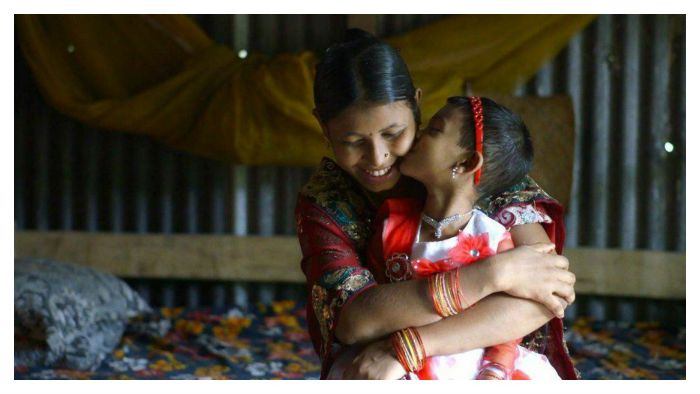
 But instead I will leave you with the haunting words of Shima, a young Bangladeshi woman and mother who since the age of 12 has been a garment worker. She was in the Rana Plaza collapse and had previously spoken up against her factory owners about working conditions, a move that caused her to be beaten with electric cords and cut with scissors. Shima was forced to take her precious young daughter Nadia to her parents’ house far away and leave her there because she so desperately wanted a future for her that was better than her own. She is beautiful. She is strong. And it is for people like her that we need to take a stand.

“People have no idea how difficult it is for us to make their clothing. They only buy it and wear it for a while. I believe this clothing is made by our blood. A lot of people die in factories. I don’t want anybody wearing something that was made with blood. I never wanted this.”  - Shima

                            Shima with her daughter Nadia before leaving her with relatives to return to work.                                 


Friday, 13 November 2015

The True Cost


In these past two years, I have become increasingly aware of and concerned with the origins and the ethics of the clothing we wear, a journey that was catalysed just recently when I watched a documentary called ‘True Cost’, a film about the many hearts and hands behind clothing and the impact of such an industry on our poorer neighbours and our environment. 

Now that I have seen, I am responsible.  As a Christian, as a human, as a young person... Now I am accountable for my response.
 And part of that is that I want to make other people aware of the cost of our clothing. The challenge as a writer is, how do I present this information, this story, this scandal,  in a way that makes people stop and think, but that leaves them empowered and passionate rather than condemned and hopeless.  I’m not sure. And maybe I won’t get it right, but I want to try anyway. So this will be a three part series of blog posts, covering the horror of it, the hope of it and then the responsibility of the church with a little bit of Jesus theology mixed in, since He seemed to have a few things to say about this. I believe it is the responsibility of everyone, but I write from the perspective of the church partly because I am a part of it. But mostly because, as the body of Christ, the God man who lived among the poor, fought for the dignity of women and children and those in poverty, then charged us to do the same, I believe we should make up the front battle lines on this issue and right now that is not the case.

So, over these next couple of weeks, as I post each part of this, take some time to read it. Please don’t scroll past, please don’t just look at the pictures and miss the words because they’re long... Allow yourself to feel the holy tension between what is and what should be. This is an uncomfortable truth, so don’t be afraid to feel that way. 

http://www.oxfamblogs.org/fp2p/wp-content/uploads/garment-workers-bangladesh.bmpWe can’t continue to keep our eyes closed anymore. This is too important. 

With love from the front lines, I’ll see you soon

Sunday, 1 November 2015

Finish Well

These next two months are a funny time of year, November and December... The downward home run of our calendar.

As a student, exams are over and we're all talking about our summer plans. In church we're seeing smaller numbers as people leave for a few months and year long groups are starting to finish up. Winter clothes are going away and the summer clothes are coming out again...
The Dunedin streets are emptier and there is the occasional couch or bed frame being carried to next years flat, because lets be honest, what student has a car that can actually carry anything?


It can be an exciting time and a much needed break from the work through the year, but there is also a very real danger lurking in these next two months...

It's so easy to think of ideas and plans but put them aside till next year. It's easy to let commitments and responsibilities you've had all year slide a bit.
The new years mindset that says "Oh, it doesn't matter, I'll start again in the new year..." Start praying again, start exercising again, start making an effort in difficult relationships again, start being organised and replying to email again, and the list can go on.

But my friend, November and December are still very worthy months to live fully in, people are still worth loving and God is still worth pursuing! Finish well.
Look forward to the new year and celebrate what will begin then, but don't miss these next two months, keep running, finish well.